Good reference article:
https://www.sltrib.com/religion/2026/08/29/lds-book-mormon-videos-made/
LDS cinema enters a new era as members turn to A.I. to tell the story of the Book of Mormon
The clips have gained praise from viewers, but some worry about the moral and spiritual impact of A.I.-generated art.
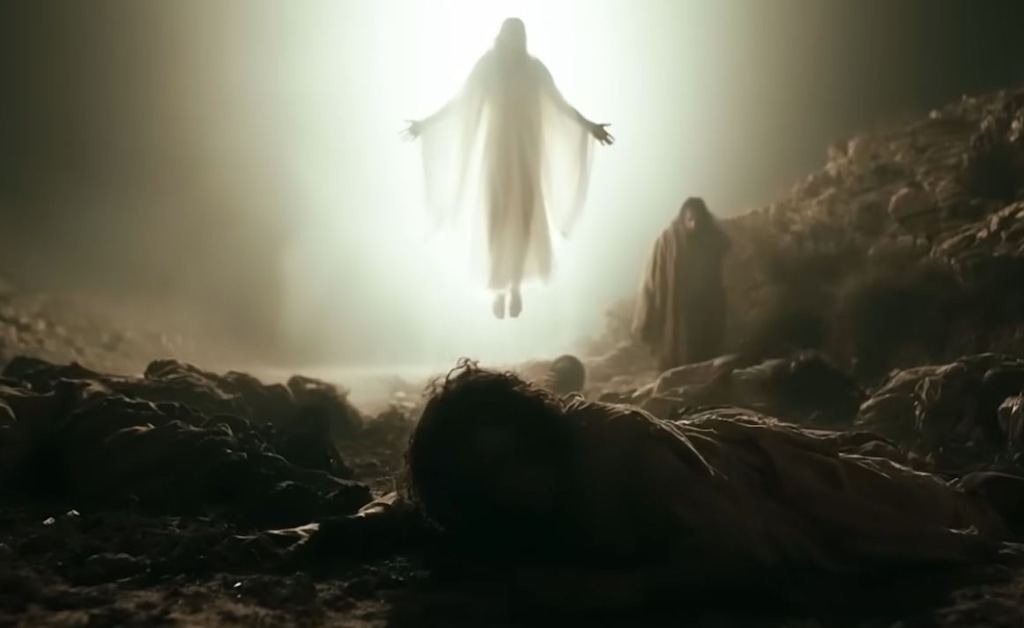
(YouTube screengrab) A concept trailer of a Book of Mormon movie made entirely with A.I. has won praise from viewers and concern from scholars.
 Tamarra Kemsley
Smoke rising from a devastated city. Monstrous waves crashing against boats. Arrows flying through a dusk-orange sky. And lots of muscular men.
These are just a few of the scenes that comprise a concept trailer for a movie version of the Book of Mormon, the signature scripture of The Church of Jesus Christ of Latter-day Saints.
The visuals are sweeping, the kind of production once limited to the likes of Peter Jackson and James Cameron. That’s because all of it — every actor, every stitch of clothing, every panoramic shot — is generated entirely by artificial intelligence.
The hand prompting the machines belongs to Dustin Harding, a Latter-day Saint and an actor-turned-marketer who teaches at Orem’s Utah Valley University.
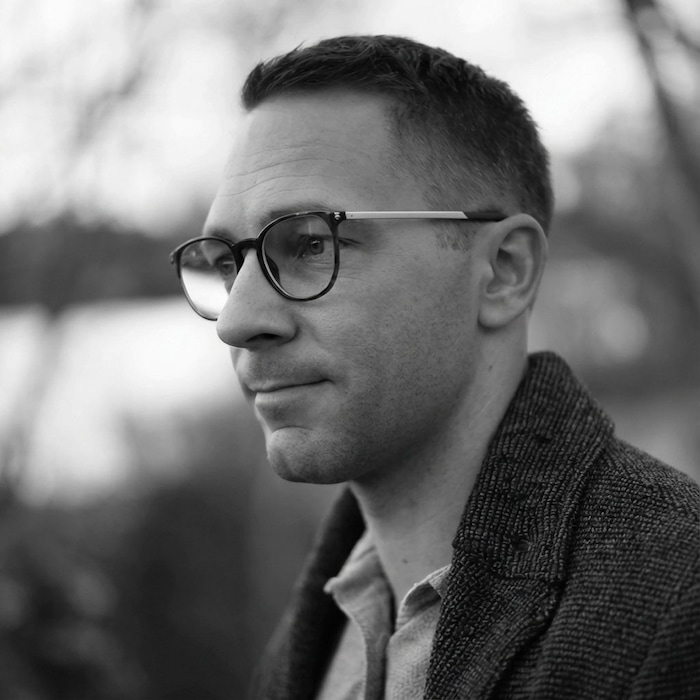
(Dustin Harding) When he's not teaching marketing classes at Utah Valley University or taking on various work projects, Dustin Harding is busy producing an A.I.-generated series about the Book of Mormon.
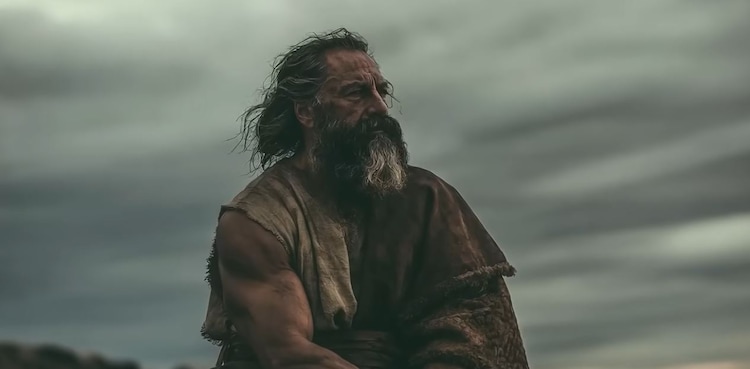
(YouTube screengrab) The trailer begins with a shot of the Book of Mormon prophet Moroni, the final contributor to the sacred text.
The project was meant to be a one-off, an entry to a competition funded by an independent organization hoping to generate Book of Mormon sales. But a flood of positive comments persuaded Harding, recognizable to many members for his portrayal of faith founder Joseph Smith in multiple church films, to stick with the undertaking.
“Before this experience, I would have wondered, can you feel the spirit [of God] from A.I.? Is this something that can be uplifting?” he told The Salt Lake Tribune. “And I’ve seen time and time again that it can bring those feelings.”
Serializing the Book of Mormon
To start, Harding is focusing on the story of 2,000 young heroes known in the Book of Mormon as the stripling warriors.
Drawing on inspiration from the blockbuster New Testament adaptation “The Chosen,” he has ditched the stilted language of scripture — preferred by the church’s own Book of Mormon video series — and introduced original characters.
Still shy of a completed episode, he has released snippets of what he has titled “Two Thousand Strong,” including a nearly three-minute trailer at once reminiscent of “Braveheart,” “Lord of the Rings” and “Game of Thrones.”
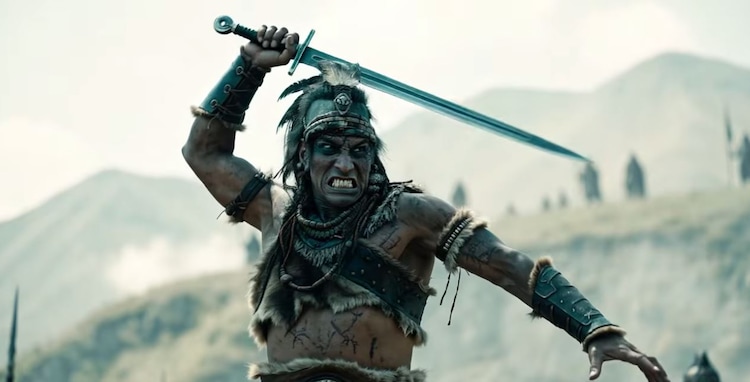
(YouTube screengrab) Using the format and style of "The Chosen" as his guide, Harding is working on an A.I. series about the Book of Mormon characters known as the stripling warriors.
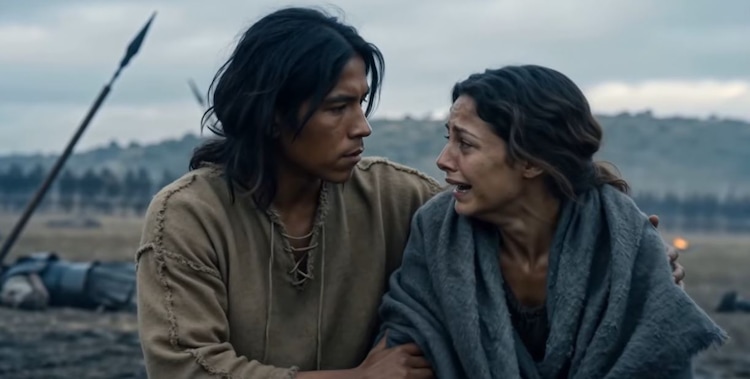
(YouTube screengrab) For the series, Harding has created new characters and avoids the stilted language of scripture for dialogue.
“I’m making this as one Latter-day Saint marketing professor in Utah,” he wrote on the post in which he launched the clip. “No studio, no crew — using A.I. filmmaking tools.”
A.I. and agency — a theological bind
If viewers have a problem with the approach, it doesn’t come through in the hundreds of social media comments praising the trailers of either project.
“I felt the spirit with this short video,” reads one. “Thank you for creating and sharing [it].”
Reads another: “Please, please, PLEASE make this happen! This is incredible. I’ve been waiting my whole life for a Book of Mormon movie like this!”
Scholars of Latter-day Saint art and culture are more hesitant.
That includes film scholar Mason Allred, an associate professor at church-owned Brigham Young University-Hawaii, who said he has conflicting feelings about the endeavours.
“I’m torn,” Allred said. “I guess it’s sad to admit that using A.I. to tell the stories of the Book of Mormon could overcome one of the historical hurdles of LDS cinema, which has been amateur actors.”
Such was one of the major issues that plagued the 2003 feature-length film, “The Book of Mormon, Volume One: The Journey,” critics said at the time.
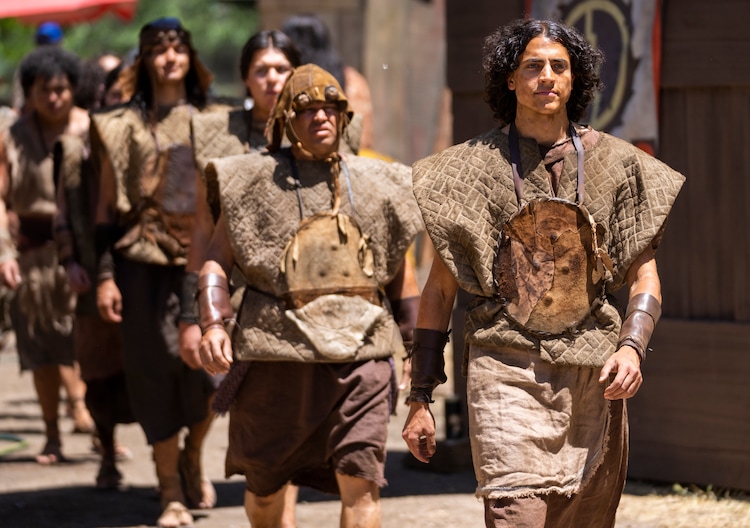
(Rick Egan | The Salt Lake Tribune) Real actors portraying the stripling warriors walk to their positions as part of a Book of Mormon series the church filmed.
Then again, Allred has a hard time feeling enthusiastic about a project produced by “extracting from the work of all kinds of humans — artists, writers, actors and sources from all over the digital world — without any recognition of their labor.”
The ethical quandary extends beyond issues of plagiarism, he stressed. Latter-day Saint theology focuses heavily on the idea of individual agency. But A.I. doesn’t ask creators to lend their talents or likeness to an A.I.-generated video. It “forces them,” Mason said.
One way Harding has tried to address this dilemma is by taking pains to steer the technology away from straight copy and pasting.
“You do have to watch,” he said. “For instance, if I’m using [A.I. assistant] Grok to make an image of Christ, it’s almost always going to try to turn that into ‘The Chosen’ Christ.”
But art, Harding said, is always derivative to some degree.
‘Replicate tropes’
Jenny Champoux, director of the Book of Mormon Art Catalog, senses in Harding’s clips the influences of Latter-day Saint painters Arnold Friberg and Walter Rane, plus sources from outside the tradition, such as the Mel Gibson movie “Apocalypto.”
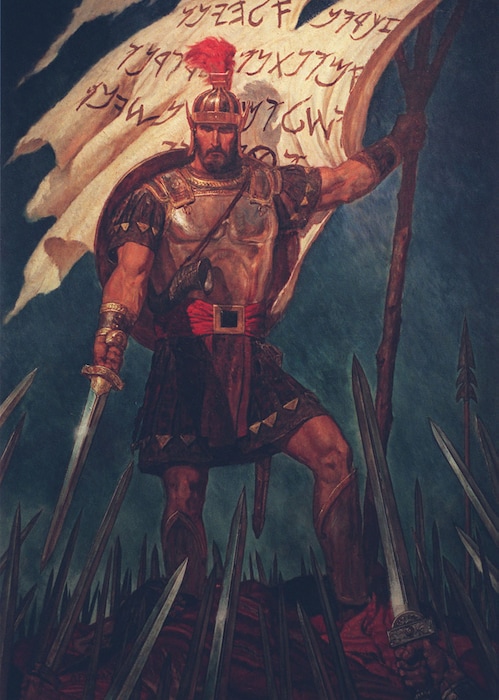
"Captain Moroni Raises the Title of Liberty" oil on canvas by Arnold Friberg.
The architecture and costuming, meanwhile, run the gamut from Mayan-esque headdresses to Corinthian columns and carved friezes.
This bricolage aesthetic points to a long-standing tension found in the Book of Mormon itself: the cultural dynamic between the Lamanites and the Nephites.
The book depicts the warring clans as racial and religious foils to each other, with darker-skinned Lamanites generally serving as the wicked counterparts to lighter-skinned Nephites.
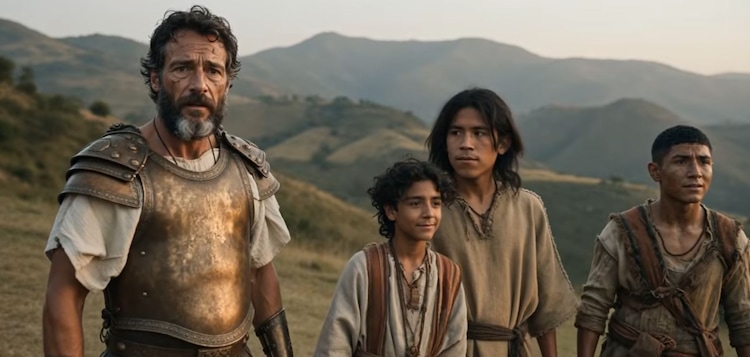
(YouTube screengrab) Helaman, a Nephite, stands far left, Lamanite boys to his right in Harding's "Two Thousand Strong."
Historically, this has typically resulted in art in which Lamanites appear as Indigenous and Nephites as European.
Champoux sees this same dynamic at play in Harding’s work.
So, too, does Elise Boxer, a University of South Dakota associate professor of American Indian studies raised in the church.
Boxer, who is Dakota, said the clips “replicate tropes of Indigenous people as violent and filthy.”
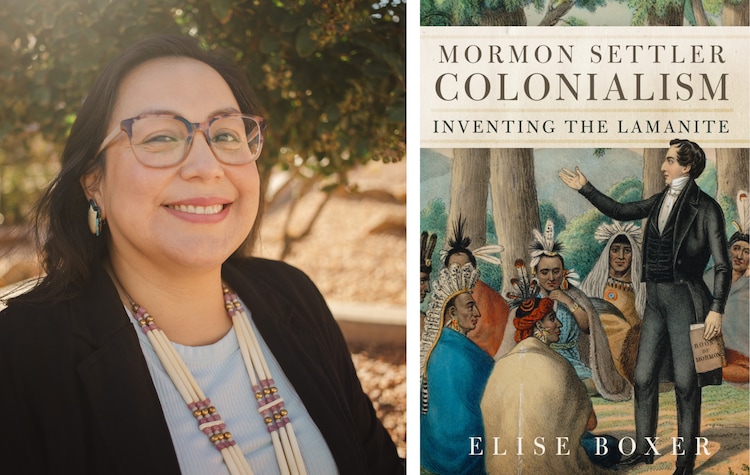
(John Legg, University of Oklahoma Press) Scholar Elise Boxer and her 2025 book, "Mormon Settler Colonialism: Inventing the Lamanite."
“In general,” the author of the 2025 book “Mormon Settler Colonialism: Inventing the Lamanite” said, “these clips advance a very specific narrative found in the Book of Mormon that does not reflect the people in which the book is said to be about.”
To this, Harding said he plans to capture not only the violence but also the peaceful depictions of the Lamanites found in the text.
Future of LDS art
Church leaders have discouraged members from handing over lesson preparation and the crafting of Sunday sermons to technology. But Harding said that since his work has gained attention, the church has hired him to produce A.I.-generated work, although he said he was not at liberty to discuss the details.
Meanwhile, Harding’s embrace is unlikely to be the last example of members’ using it to spread the faith’s message.
The Ancient America Foundation, the organization that launched the competition that started Harding down his new creative journey, will reveal its winners next month.
“Make it epic,” the call for entries reads. “Make it emotional. Make it impossible to ignore.”
If that means using A.I., the description adds, so be it.
But does “epic” equate to “life-changing”?
Champoux has her doubts.
“While an A.I.-generated cinematic trailer can tug at our emotions,” she said, “it doesn’t facilitate the same kind of quiet, revelatory, internal reflection prompted by great art.”
With the technology growing in reach and sophistication by the day, no doubt more Latter-day Saints will have the chance to decide for themselves.


No comments:
Post a Comment