The Church of Jesus Christ of Latter-day Saints is positioned to thrive in 2026 and beyond.
Here are 24 reasons why:
Rising Public Attention
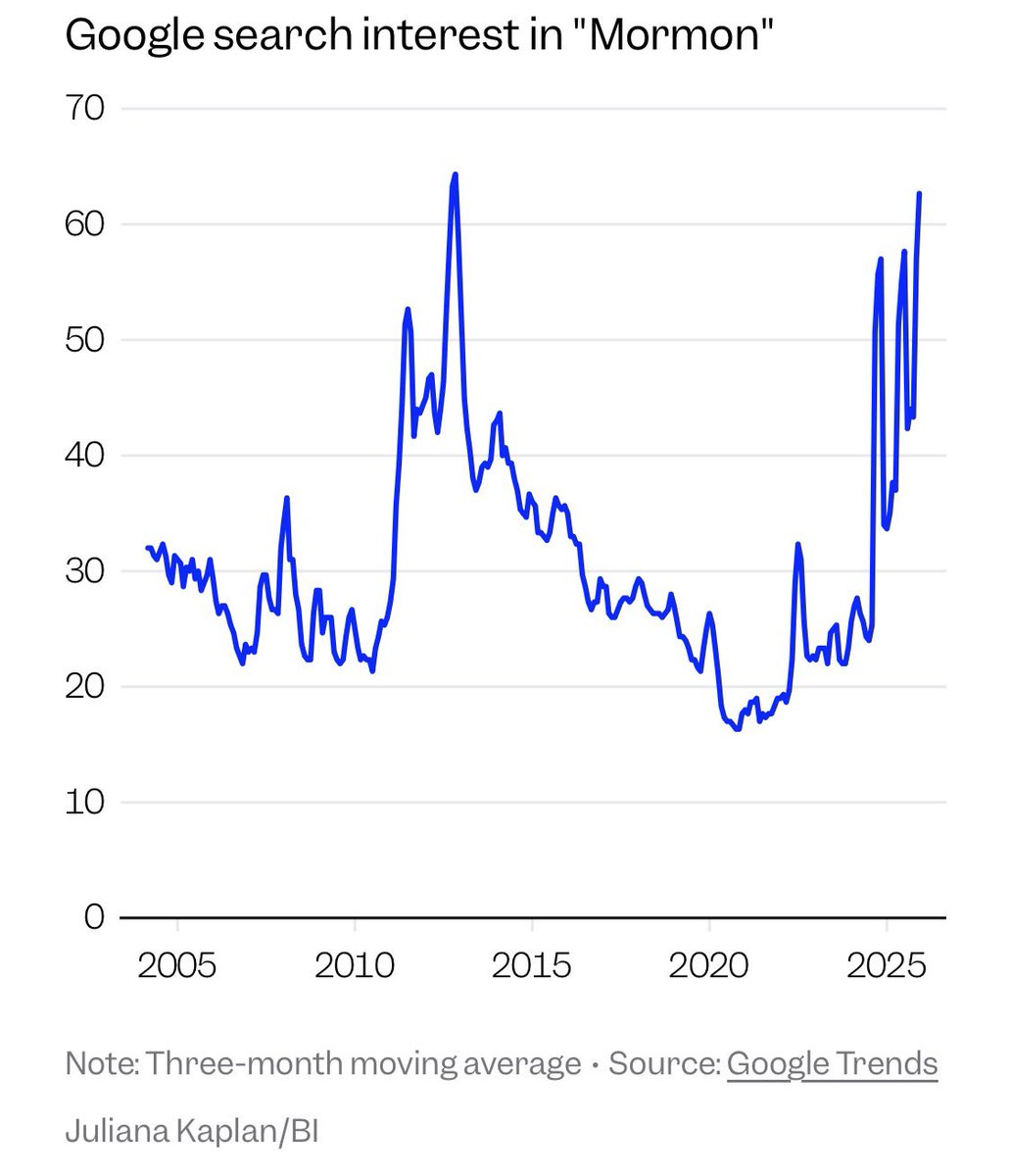
Interest in the Church is approaching historic highs. After peaking in 2012, attention surged again in 2025 and is now closing in on that all-time high.
Digital Testimony Growth
Latter-day Saints are increasingly sharing faith online. Social media has become a powerful space for everyday testimony, allowing belief to travel faster and farther than ever before.
Historic Convert Growth
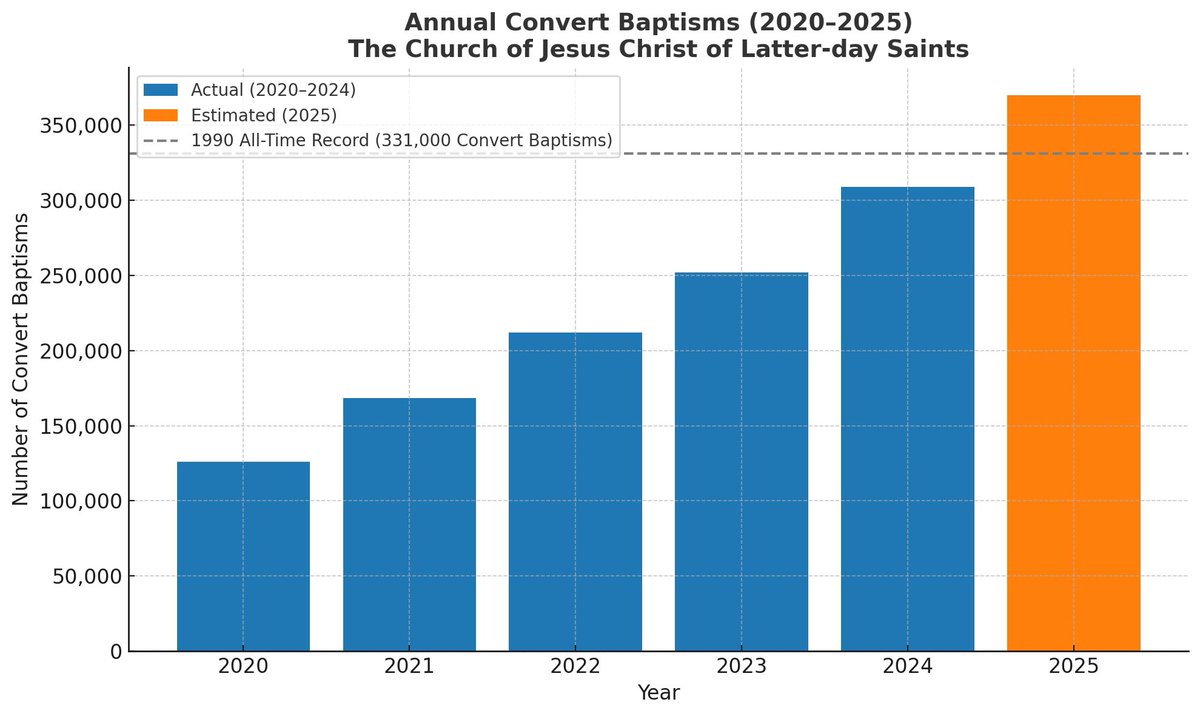
Convert baptisms reached the highest 12-month total ever in July 2025.
Growth rose 20% globally and 17% in North America.
2025 is on pace to be the strongest year in Church history.
Missionary Expansion
The Church now has 506 missions worldwide. Missionaries increased from 65,000 in 2022 to over 84,000 in 2025, serving in 150+ countries and 60+ languages.
Youth Engagement Surge
More than 150,000 teens attended FSY camps in North America, up 15% year over year.
Seminary enrollment is also at record levels, signaling deep youth involvement.
Age Structure Advantage
Demographics shape destiny.
The Church’s U.S. membership includes an unusually large share of young adults, roughly one in four, setting it apart from most Christian groups.
Active Young Believers
Young Latter-day Saints are far more likely than peers to say religion matters in their lives, reflecting durable belief rather than inherited identity.
Religious Commitment
According to the latest Pew Research Center study, Latter-day Saints attend church more regularly than any other U.S. religion, even among young adults, and lead all faiths in scripture study, daily prayer, and reported spiritual peace.
High Retention Rates
In a time of religious decline, Latter-day Saints retain members at higher rates than nearly all Christian groups.
Retention remains among the strongest in American religion.
Well-Being Advantage
National surveys show Latter-day Saints report higher happiness and stronger family life than the national average.
Former members are more likely to report lower well-being, not higher.
Youth Mental Health Benefits
Research finds temple attendance is linked to lower depression and anxiety in teens.
Attendance at age 16 predicts better mental health at 18.
Education and Religious Trajectories
Among Latter-day Saints, higher education correlates with stronger religious practice.
On average, those who remain in the Church tend to be more highly educated than those who leave.
U.S. Education Milestones
BYU campuses reached record enrollment.
Institute enrollment also hit record levels.
Progress toward a BYU medical school continues, strengthening the Church’s long-term education footprint.
Global Education Reach
Over 85,000 students in 180 countries are enrolled in BYU–Pathway Worldwide. Three-quarters live outside the U.S., over half in Africa.
A prominent Catholic scholar called it “one of the greatest gifts to the world.”
Global Food Security
Church-owned farmland across hemispheres enables year-round food production, strengthening long-term welfare and humanitarian capacity.
Welfare Infrastructure
A global network of food storage, logistics, and local leadership allows rapid response to need, serving both members and non-members.
Financial Stewardship
Long-term reserves provide stability, independence, and continuity, ensuring worship, education, and service endure across generations.
Prepared for Global Volatility
Economic swings, disasters, and rapid global growth require resilience. Financial preparedness allows the Church to respond without disruption.
Support from Biblical Scholars
Biblical scholarship widely agrees that Greek philosophy and church councils reshaped Christianity after the New Testament.
As later creeds moved away from the original teachings of Jesus and the Bible, the need for a Restoration became clearer.
Book of Mormon Evidence
Archaeology, linguistics, and technology continue to align with the Book of Mormon’s ancient claims.
Over time, the text fits more naturally into the ancient world.
The Book of Mormon looks better with age.
Archival Transparency
Expanded access to Church archives and documentary projects allows historians to study the Restoration through primary sources rather than speculation.
Marital Stability
Multiple studies find that marriages among Latter-day Saints are unusually stable and report high levels of marital happiness, consistently outperforming national patterns.
Family Formation and Fertility
Pew Research finds Latter-day Saints are the Christians most likely to have children at home.
Research by Ryan Burge shows they also have the highest fertility rates. Growing families mean generational continuity.
Exceptional Youth Outcomes
Large national studies consistently find that Latter-day Saint teens stand out for strong faith integration, higher well-being, close family relationships, healthier lifestyles, and greater hope for the future compared with their peers.


No comments:
Post a Comment